Quick Start Guide
To start using a new instance of the Geospatial Tracking System (GTS), the GTS system administrator creates your Organization and your Organization Focal Point account. You can then manage all aspects of your Organization in the GTS.
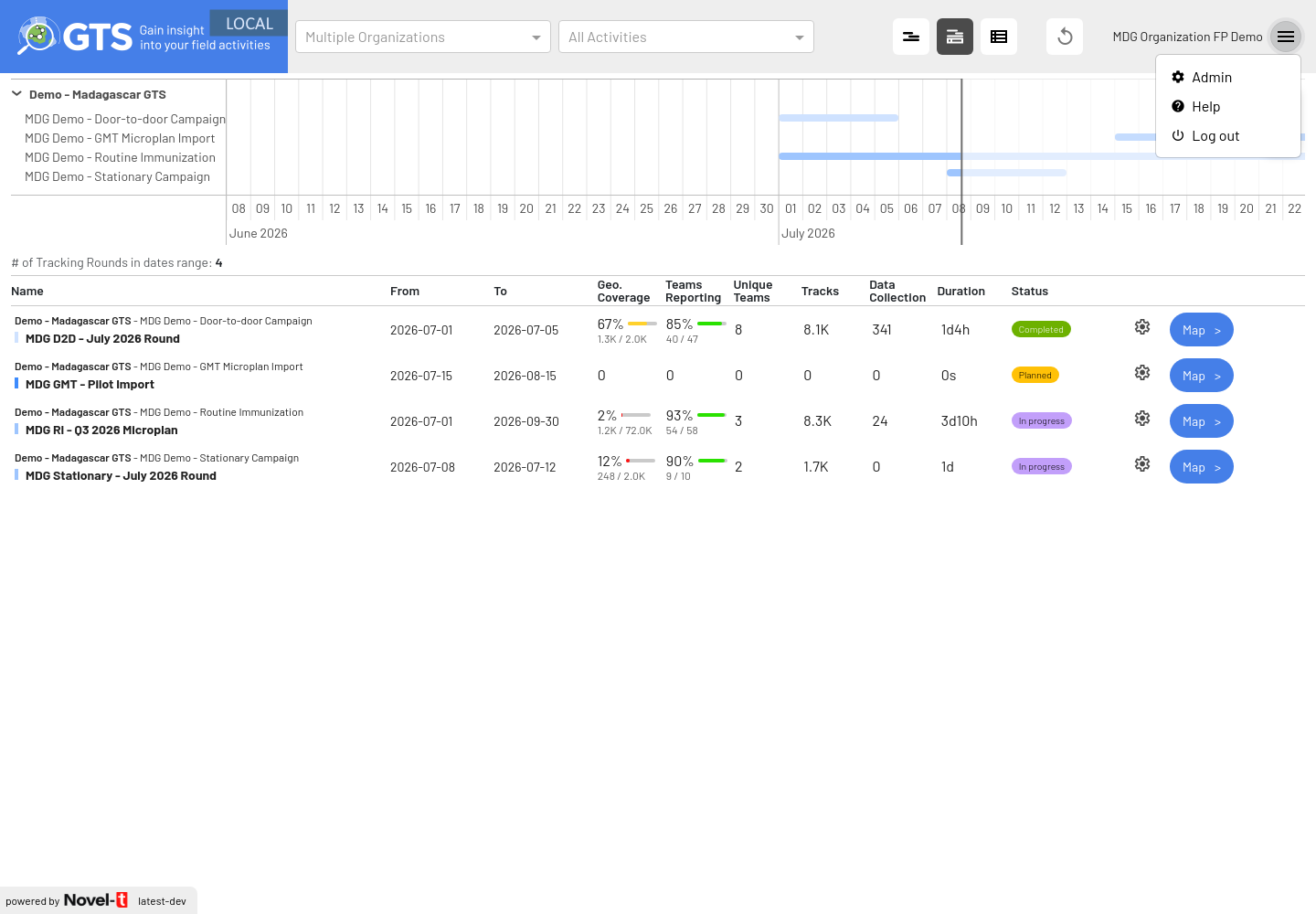
When you receive your credentials, go to https://gts.health/, click Connect to GTS and sign in. Then open the administration: click the Menu button next to your user name, then Admin (see Accessing The GTS Admin Console).
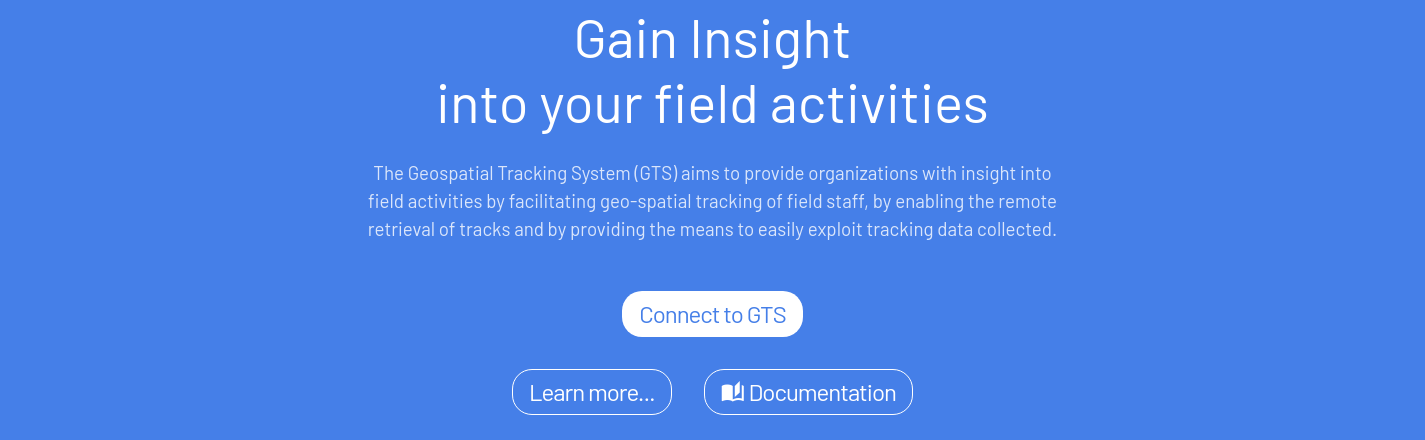
GTS home page: click Connect to GTS
Note
If you do not know your password yet, use the change password procedure, which is
documented. This is only possible for
accounts that have an e-mail address.
A first configuration follows these steps:
create the Field Activity (how tracks are collected);
create the accounts: dashboard accounts for your colleagues and field staff for the people who will be tracked;
create a Tracking Round and configure its Targeted Areas;
install the GTS Mobile Application on the Android phones.
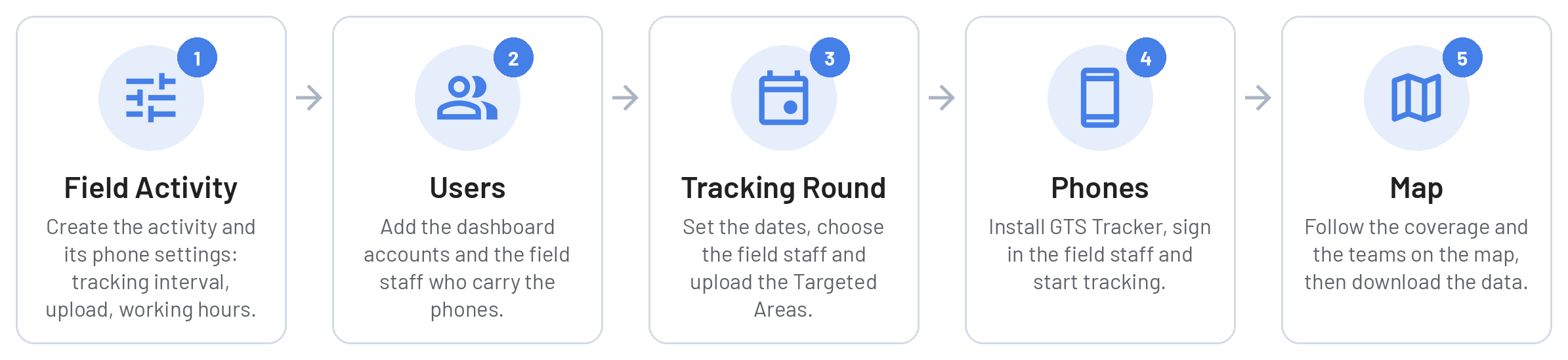
From a new Organization to the map. Each procedure below is shown step by step: click the numbered tabs.
Field Activities
A Field Activity groups the Tracking Rounds of one activity and holds the settings of the phones. Only the Name is required; the other settings have default values that you can change later.
Click the Menu button next to your user name, then Admin. If you belong to several Organizations, click the name of your Organization.
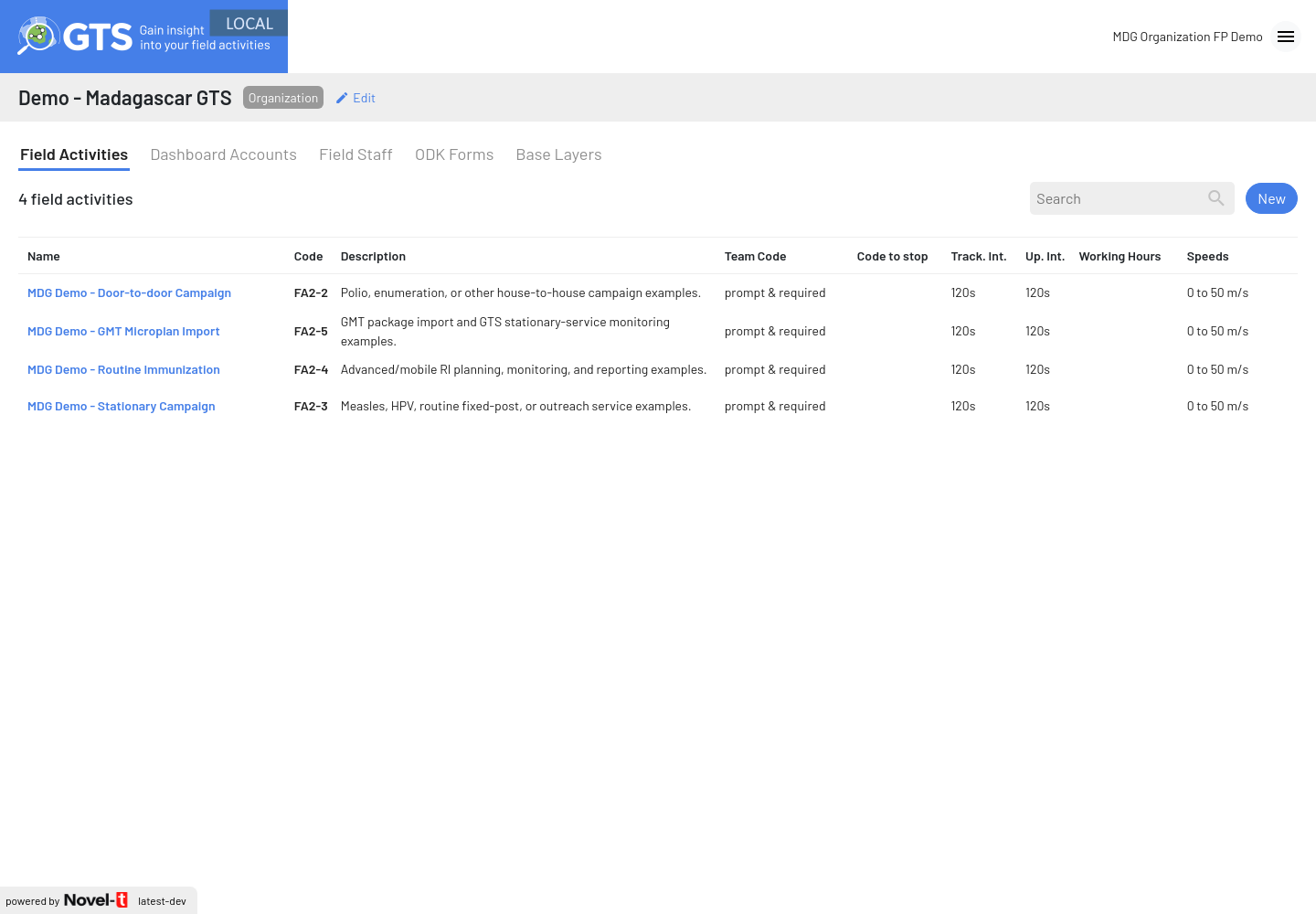
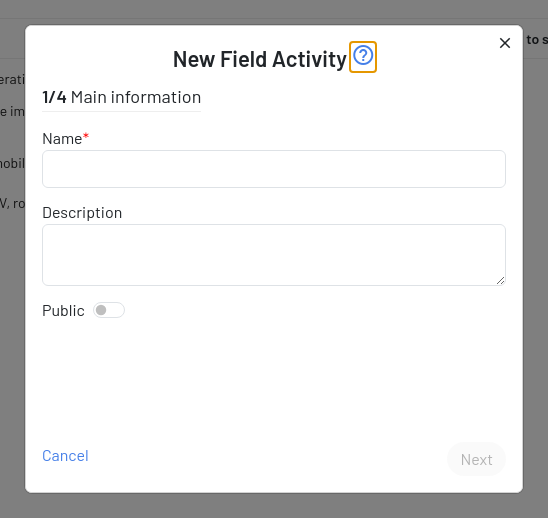
With the Field Activities tab selected, click the  button. The New Field Activity wizard has
four steps; click Next to go to the next one.
1/4 Main information: enter the Name of the activity and, if useful, a Description.
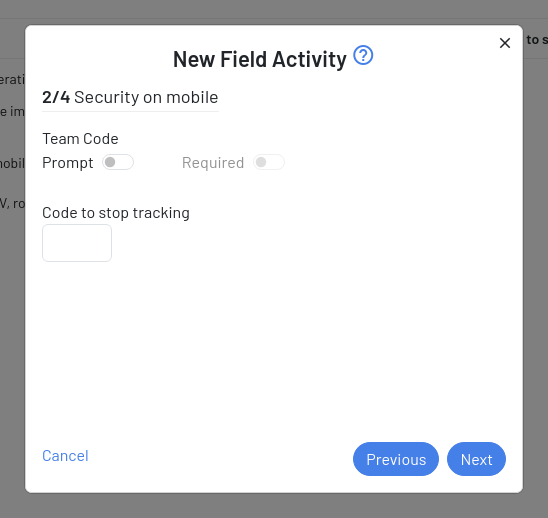
2/4 Security on mobile:
Team Code: turn on Prompt to ask field staff for a team code when they start tracking, and Required to make it mandatory. Use team codes when several teams share a generic account.
Code to stop tracking: a 4-digit code that field staff must enter to stop tracking.
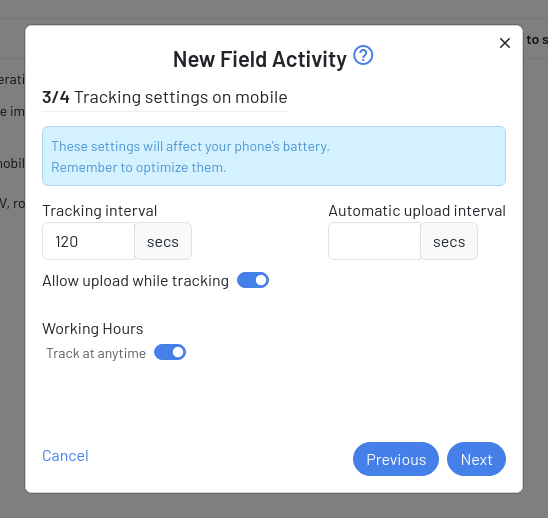
3/4 Tracking settings on mobile:
Tracking interval: how often a GPS point is recorded (every 120 seconds by default).
Allow upload while tracking (on by default) and Automatic upload interval: whether and how often tracks are sent while tracking.
Working Hours: tracks are collected only during these hours (at any time by default). Working hours preserve the privacy of field staff and save battery.
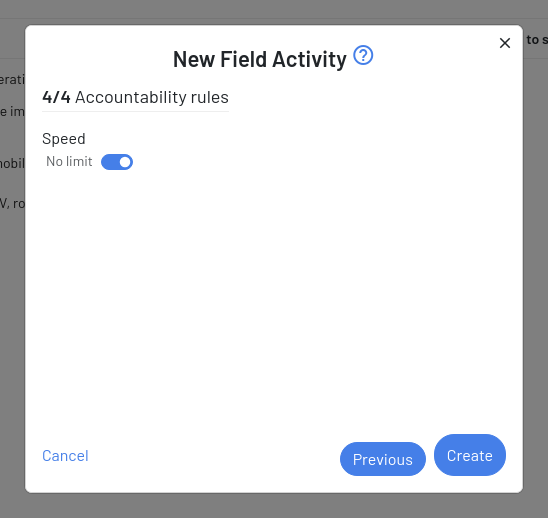
4/4 Accountability rules: Speed sets the speeds between which tracks are considered valid (no limit by default). Click Create: the Field Activity appears in the list. To change it later, hover over its row and click the pencil icon.
For further details see the Field Activities section of this guide.
Users
Users are either dashboard accounts or field staff, and the same person may be both.
Dashboard Accounts: people who use the web dashboard. As Organization Focal Point, you are the first dashboard
user. To add others, select the Dashboard Accounts tab and click the button.
User Roles and Permissions: roles define what a dashboard account can see and do. Every account is a Member (maps, indicators and downloads); give the Organization Focal Point or Field Activity Focal Point role to the colleagues who configure GTS.
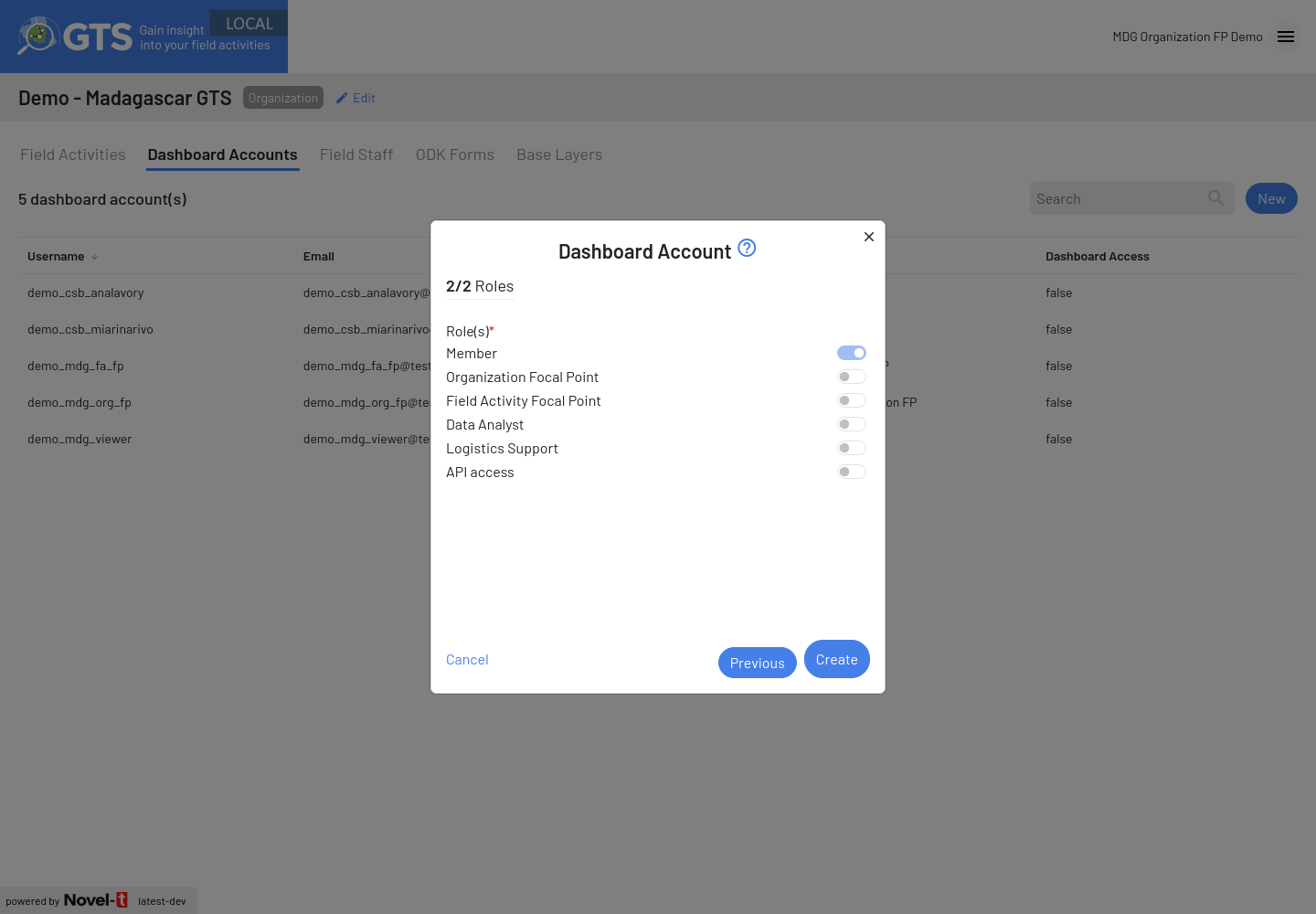
For further details see the Dashboard Accounts section of this guide.
Field Staff: people who use the mobile application and whose movements are tracked. A field staff account is either assigned to one person (nominative) or shared by a team (generic). Field staff are created for the Organization, linked to Field Activities, then chosen in each Tracking Round.
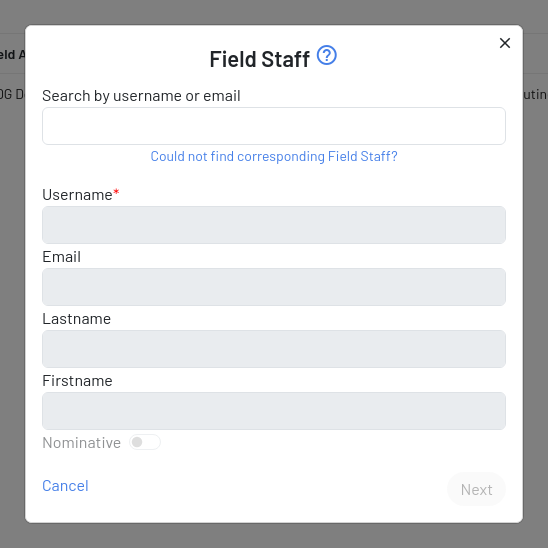
In the Field Staff tab of the Organization, click the button. The first screen looks for an existing
account (Search by username or email), for example a person who already works for another Organization.
To create a new account, click Could not find corresponding Field Staff?.
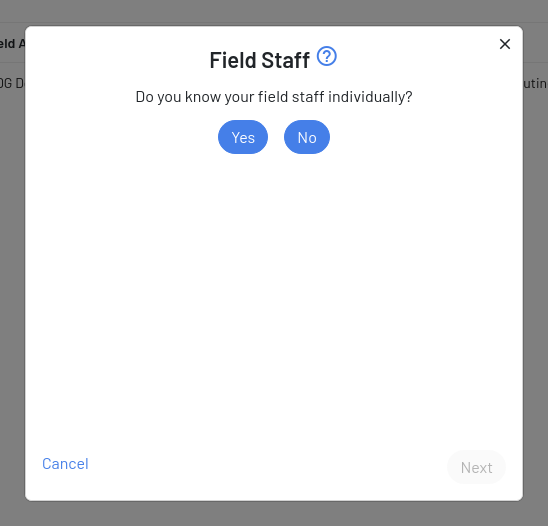
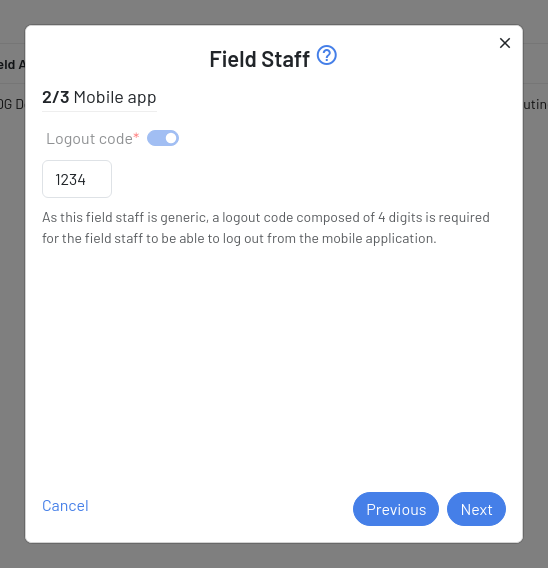
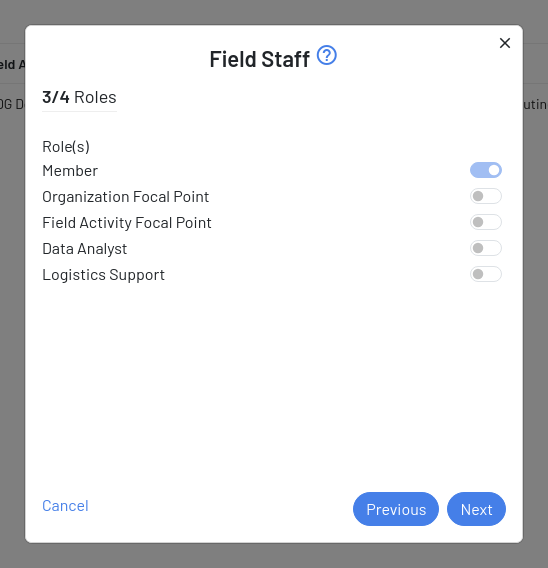
Do you know your field staff individually? Click Yes for a nominative account (one person, with a last name and a first name) or No for a generic account shared by a team; the team then gives its team code when it starts tracking. The wizard has three steps for a generic account (Identity, Mobile app, Field Activities) and four for a nominative account (with Roles).
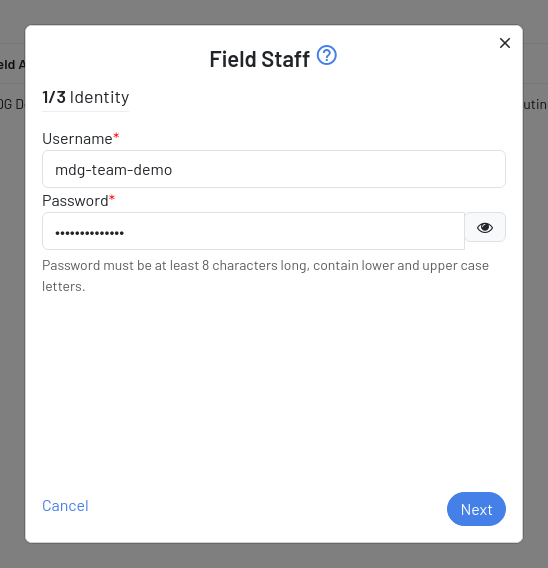
Identity: enter the Username and a password (at least 8 characters, with lower and upper case letters). For a nominative account, also enter the Email, Lastname and Firstname; with an e-mail address, the person can reset the password.
Mobile app: the 4-digit Logout code that field staff must enter to log out of GTS Tracker. It is required for a generic account, so that a phone prepared for a team is not logged out by mistake.
Roles (nominative accounts only, shown to users who can manage roles): Member is always selected; add another role only if the person also configures GTS in the dashboard (see Roles).
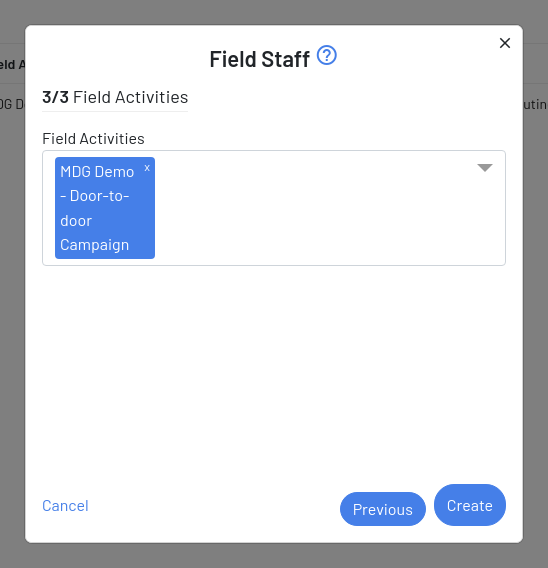
Field Activities: select the Field Activities of the field staff, then click Create. When you create field staff from the Field Staff tab of a Field Activity, this last step lists its Tracking Rounds.
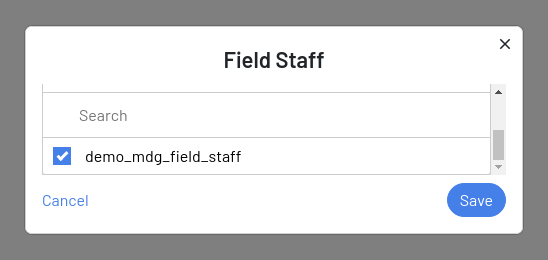
In each Tracking Round, open the Field Staff tab and click Manage to choose the field staff of the round among those of the Field Activity.
For further details see the Field Staff section of this guide.
Tracking Rounds
A Tracking Round is a period of the Field Activity, for example one round of a campaign.
Click the name of the Field Activity to drill down, open the Tracking Rounds tab and click
.Enter the Dates, the Name, and select the Field Staff, then click Save.
Click the name of the Tracking Round to drill down, and upload its Targeted Areas in the Targeted Areas tab.
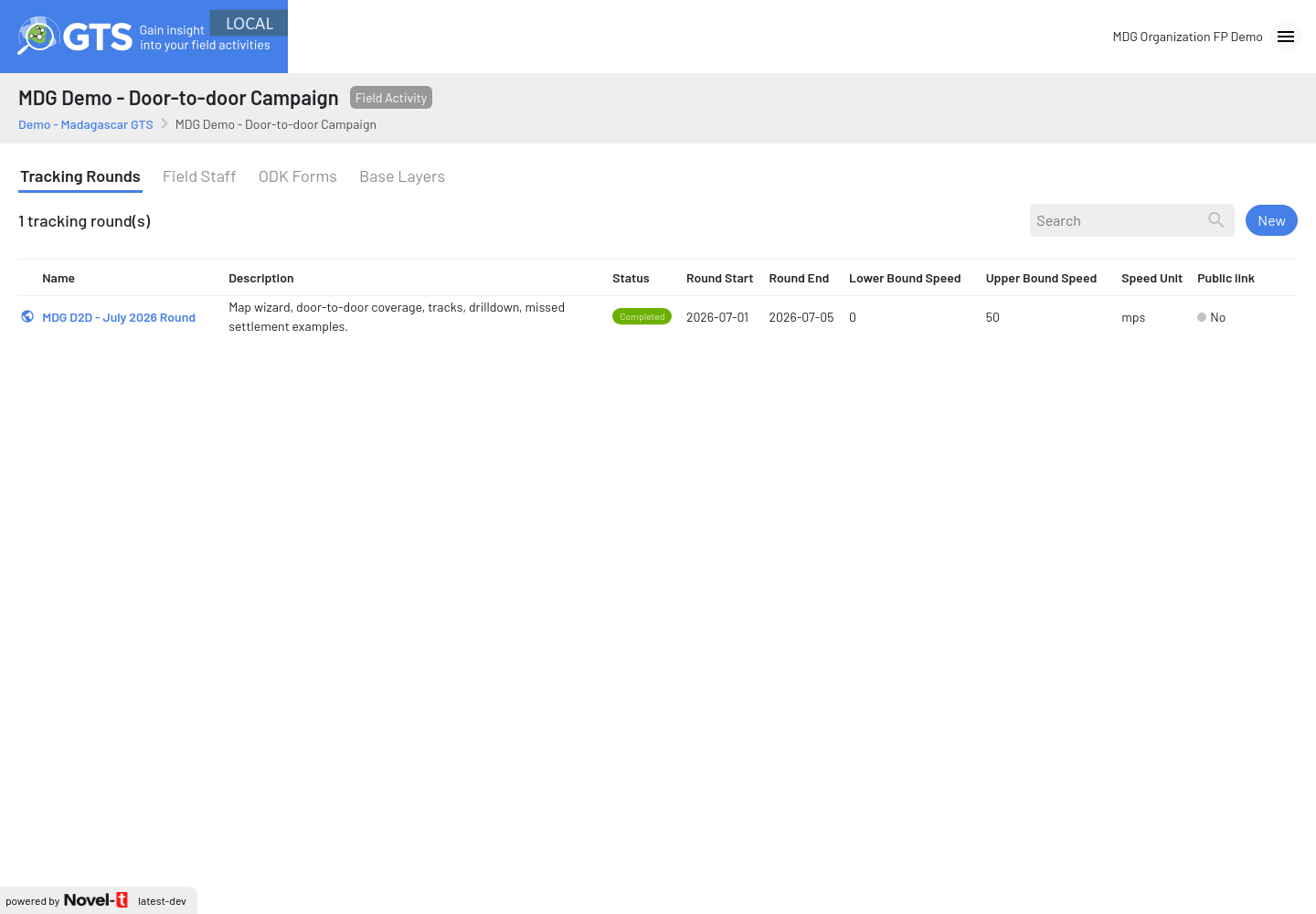
For further details see the Tracking Rounds section and the Tracking Round Level page of this guide.
Mobile App Deployment
The GTS offers two principal methods to prepare phones:
a self-service install: field staff receive instructions to download and install the mobile application;
a batch deployment: an administrator installs the application on Android phones for generic accounts.
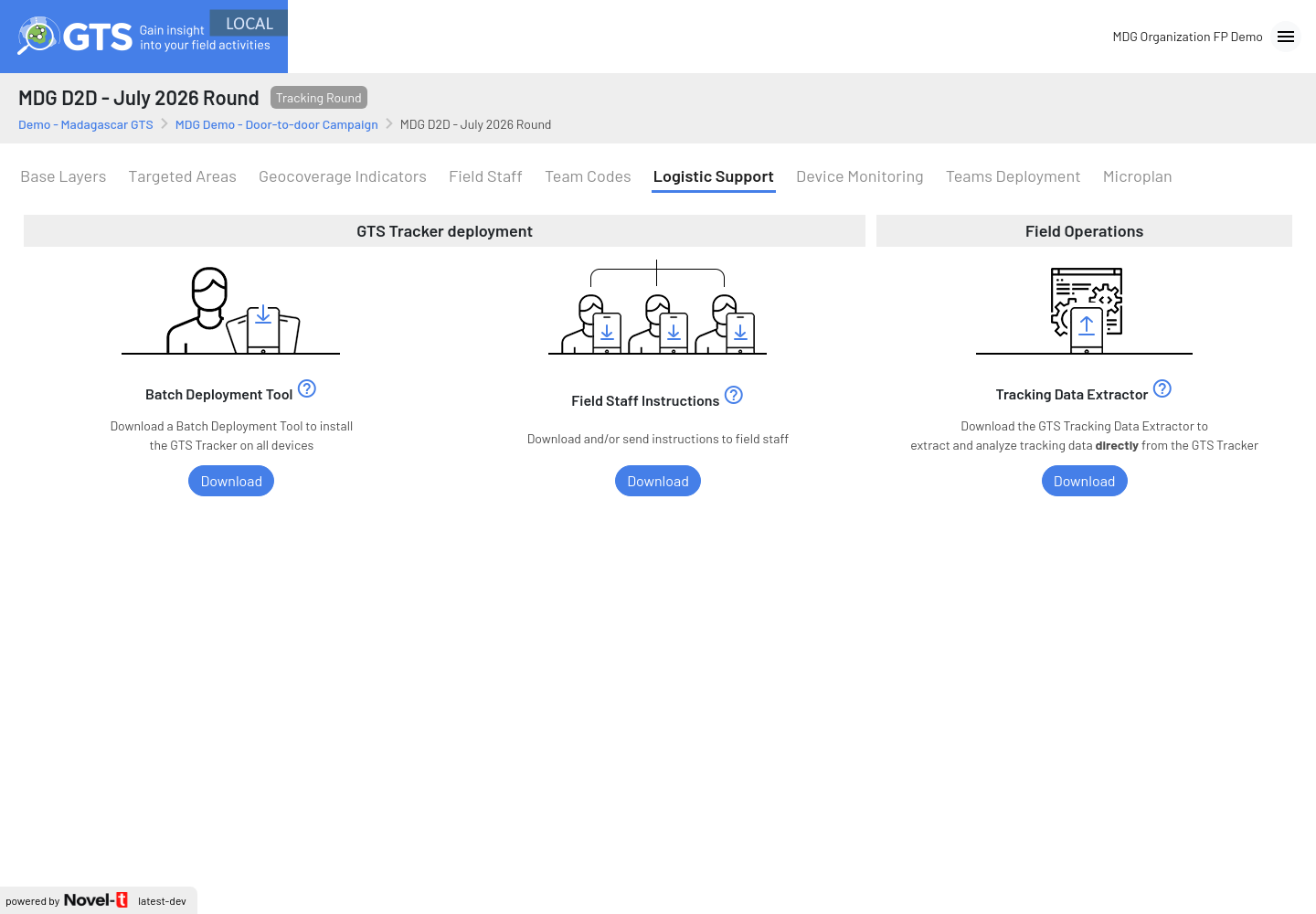
Both tools are in the Logistic Support tab of the Tracking Round. The Batch Deployment Tool can only be used for generic accounts: it installs the applications on Android phones connected to a Windows computer by USB (a USB hub lets you prepare several phones at the same time).
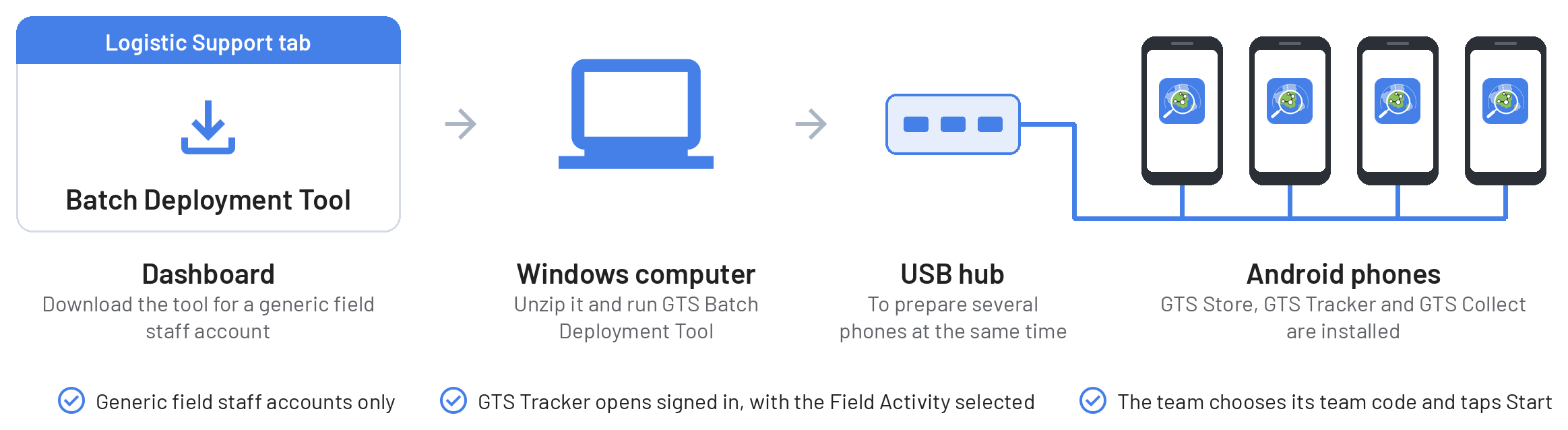
Batch Deployment Tool
On each phone, open Settings, About phone, Software information and tap Build number seven times to show the Developer options. In Developer options, turn on USB debugging. The menu names vary slightly between Android versions and phone models.
Click the name of the Field Activity, then of the Tracking Round, and open the Logistic Support tab. Under Batch Deployment Tool, click Download.
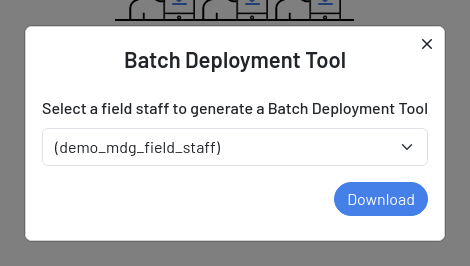
Select a field staff to generate a Batch Deployment Tool: choose the generic account and click Download.
The file gts_batch_deployment_tool_<username>.zip is downloaded.
On a Windows computer, unzip the file. It contains a README.pdf (instructions), a User Guide.pdf for the
field staff (with the QR code that signs in the generic account) and the GTS Batch Deployment Tool
shortcut. Connect the phones by USB, double-click the shortcut and accept the warnings. On each phone, allow USB
debugging from this computer when asked. The tool processes the phones one after the other: it installs GTS
Store, GTS Tracker and GTS Collect and configures Android for GTS.
GTS Tracker opens signed in with the generic account. Fix the items of the Requirements screen and install the updates if asked. Tap the play button: the Field Activity is already selected; the team enters its team code and taps Start. See Start tracking in the User Guide.
Field Staff Instructions e-mails the installation instructions directly to field staff, or downloads a .zip
file with the 2-page instructions of each person.
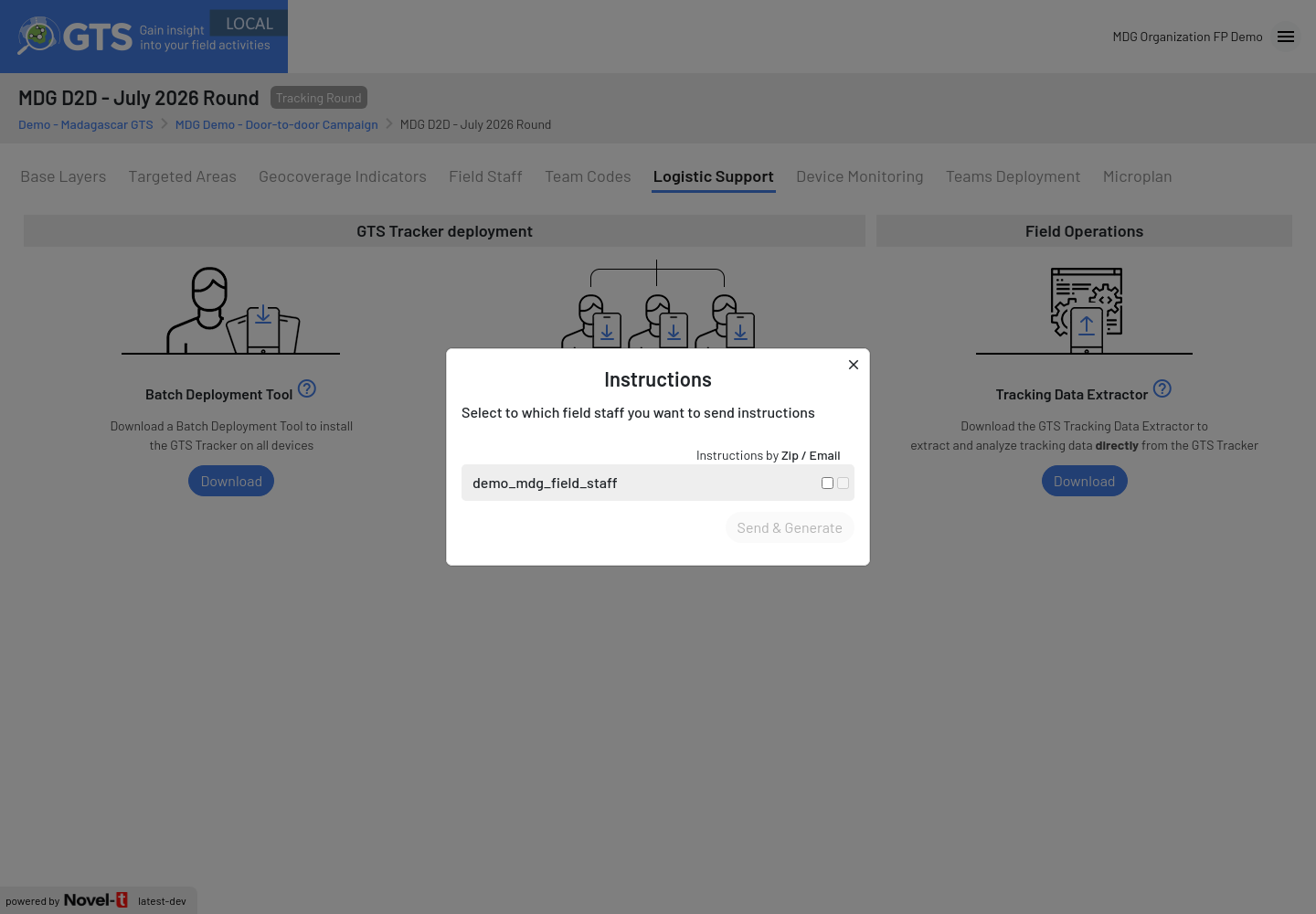
For further details see the Logistic Support section of this guide.
The GTS offers further features to enhance field activity tracking and analysis, including:
> ODK forms for active data collection during field activities;
> Base Layers and Targeted Areas for aggregated analysis of the field activities performed;
> stationary activity detection, Teams Deployment and auto microplanning, configured per Tracking Round (Tracking Round Level);
> Open Data access for Power BI (How to use the GTS OData API with Power BI).
The GTS User Guide describes how to use the maps, indicators and downloads.
Note
The GTS is designed to be intuitive and easy to use. If you have any questions for which you cannot find an answer in this guide, please reach out to us at: gts@novel-t.ch.